Spicy Gochujang Eggs Recipe
Introduction
Spicy Gochujang Eggs are a flavorful way to spice up your breakfast routine. These eggs are coated in a savory, spicy sauce that combines Korean chili paste with garlic and soy. Perfect served over steamed rice for a delicious start to your day.
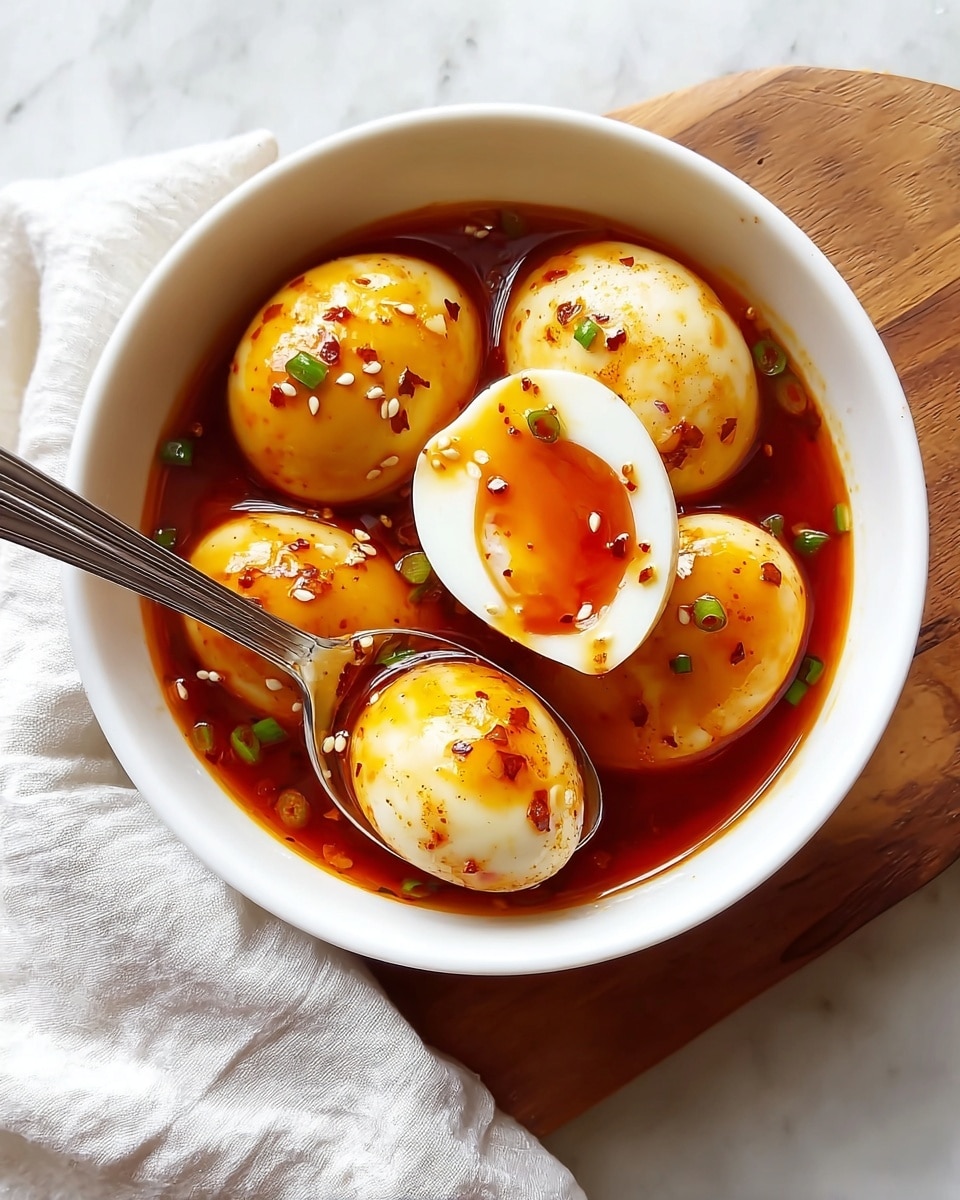
Ingredients
- 2 large eggs (boil for 6 minutes for runny or 9 minutes for hard-boiled)
- 2 tablespoons gochujang (can substitute with another red chili paste)
- 1 tablespoon soy sauce (use Tamari for gluten-free)
- 1 teaspoon sugar (brown sugar can be used for deeper flavor)
- 1 tablespoon rice vinegar (can substitute with apple cider vinegar)
- 1/4 cup chicken stock or water (vegetable stock can be used for vegetarian option)
- 1 tablespoon neutral oil (can substitute with sesame oil)
- 2 cloves garlic, minced (adjust based on preference)
- 1 tablespoon scallion, sliced (can substitute with chives or green onions)
- 1 tablespoon toasted sesame seeds (omit if avoiding seeds or nuts)
Instructions
- Step 1: Bring a pot of water to a rolling boil. Carefully add the eggs and cover. Set a timer for 7 minutes, adjusting based on your preferred doneness.
- Step 2: Transfer the eggs to an ice bath immediately after boiling to stop the cooking process. Let them cool for a few minutes, then peel and set aside.
- Step 3: In a bowl, mix together gochujang, soy sauce, sugar, rice vinegar, and chicken stock or water until well combined.
- Step 4: Heat neutral oil in a skillet over medium-high heat. Add the minced garlic and sauté for about 15 seconds until fragrant.
- Step 5: Stir in the sauce mixture and bring it to a gentle simmer.
- Step 6: Add the peeled eggs to the skillet, cooking for another 3 minutes. Turn them occasionally to coat fully in the sauce.
- Step 7: Serve the eggs over steamed rice and garnish with sliced scallions and toasted sesame seeds for added crunch.
Tips & Variations
- Use brown sugar instead of white sugar for a richer flavor in the sauce.
- Substitute chicken stock with vegetable stock to make the dish vegetarian.
- Adjust garlic amount based on your tolerance for pungency, or use roasted garlic for a milder taste.
- If sesame seeds are unavailable or unwanted, sprinkle some crushed nuts or crispy fried shallots for texture.
- For extra heat, add a pinch of Korean chili flakes or a dash of hot sauce to the sauce mixture.
Storage
Store cooked eggs and sauce separately in airtight containers in the refrigerator for up to 3 days. Reheat gently in a skillet or microwave before serving to avoid overcooking the eggs.
How to Serve
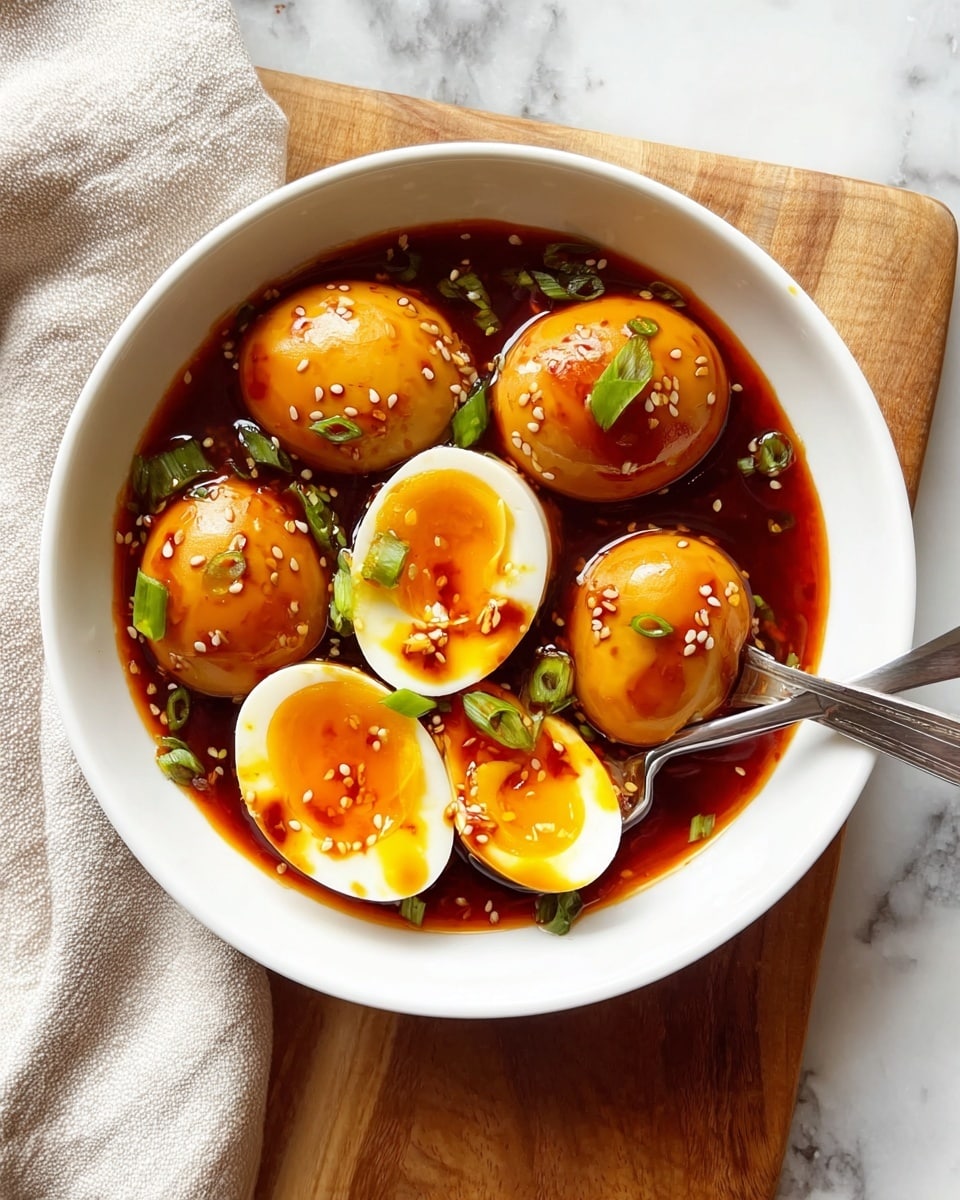
Serve this delicious recipe with your favorite sides.
FAQs
Can I use raw eggs instead of boiled?
This recipe is designed for boiled eggs to hold their shape in the sauce. Using raw eggs would change the texture and cooking process significantly.
Is gochujang very spicy?
Gochujang has a moderate heat with a deep, slightly sweet flavor. You can adjust the amount used based on your spice preference or substitute with a milder red chili paste.
PrintSpicy Gochujang Eggs Recipe

Spicy Gochujang Eggs offer a flavorful twist to your breakfast with perfectly boiled eggs coated in a rich, savory, and slightly sweet Korean-inspired gochujang sauce. This simple yet delicious recipe combines tender eggs with a vibrant sauce made from gochujang, soy sauce, garlic, and rice vinegar, garnished with scallions and toasted sesame seeds for an extra burst of texture and taste.
- Prep Time: 10 minutes
- Cook Time: 15 minutes
- Total Time: 25 minutes
- Yield: 2 servings 1x
- Category: Breakfast
- Method: Stovetop
- Cuisine: Korean
- Diet: Gluten Free
Ingredients
For the Eggs
- 2 large eggs
For the Sauce
- 2 tablespoons gochujang (can substitute with another red chili paste)
- 1 tablespoon soy sauce (use Tamari for gluten-free)
- 1 teaspoon sugar (brown sugar can be used for deeper flavor)
- 1 tablespoon rice vinegar (can substitute with apple cider vinegar)
- 1/4 cup chicken stock or water (vegetable stock for vegetarian option)
- 1 tablespoon neutral oil (can substitute with sesame oil)
- 2 cloves garlic, minced (adjust based on preference)
For Garnishing
- 1 tablespoon scallion, sliced (can substitute with chives or green onions)
- 1 tablespoon toasted sesame seeds (omit if avoiding seeds or nuts)
Instructions
- Boil the Eggs: Bring a pot of water to a rolling boil. Carefully add the eggs and cover the pot. Set a timer for 7 minutes to achieve a medium-soft yolk, but you can adjust between 6 minutes for runny or 9 minutes for hard-boiled eggs based on your preference.
- Ice Bath: Immediately transfer the eggs to an ice bath after boiling to stop further cooking. Let them cool for a few minutes, then gently peel the eggs and set them aside.
- Prepare Sauce: In a bowl, whisk together gochujang, soy sauce, sugar, rice vinegar, and chicken stock or water until well combined, creating a balanced, spicy, and slightly tangy sauce.
- Cook Sauce: Heat neutral oil in a skillet over medium-high heat. Add the minced garlic and sauté for about 15 seconds until fragrant. Pour the sauce mixture into the skillet and bring it to a gentle simmer, stirring occasionally to meld the flavors.
- Combine Eggs and Sauce: Add the peeled eggs to the skillet, cooking them for about 3 minutes. Turn the eggs occasionally to ensure they are evenly and fully coated with the savory gochujang sauce.
- Serve: Plate the eggs over steamed rice or your preferred base. Garnish with sliced scallions and toasted sesame seeds to add freshness and a satisfying crunch. Serve immediately for best flavor and texture.
Notes
- Adjust the boiling time to customize egg doneness: 6 minutes for runny yolks, 7 for medium, and 9 for hard-boiled.
- You can use vegetable stock or water for a vegetarian or lighter option instead of chicken stock.
- Sesame oil can replace neutral oil for extra nutty flavor but be careful not to burn it.
- If you prefer less heat, reduce the amount of gochujang or mix it with a mild chili paste.
- Garnishes like chives or green onions can be used instead of scallions according to what you have on hand.
- Serve with steamed rice or toast for a complete meal.
- For gluten-free, substitute soy sauce with Tamari.
Keywords: Gochujang eggs, Korean breakfast, spicy eggs, easy breakfast recipe, boiled eggs, savory sauce, Korean sauce, egg recipes