Spicy Gochujang Eggs: Elevate Your Breakfast Game Today Recipe
Introduction
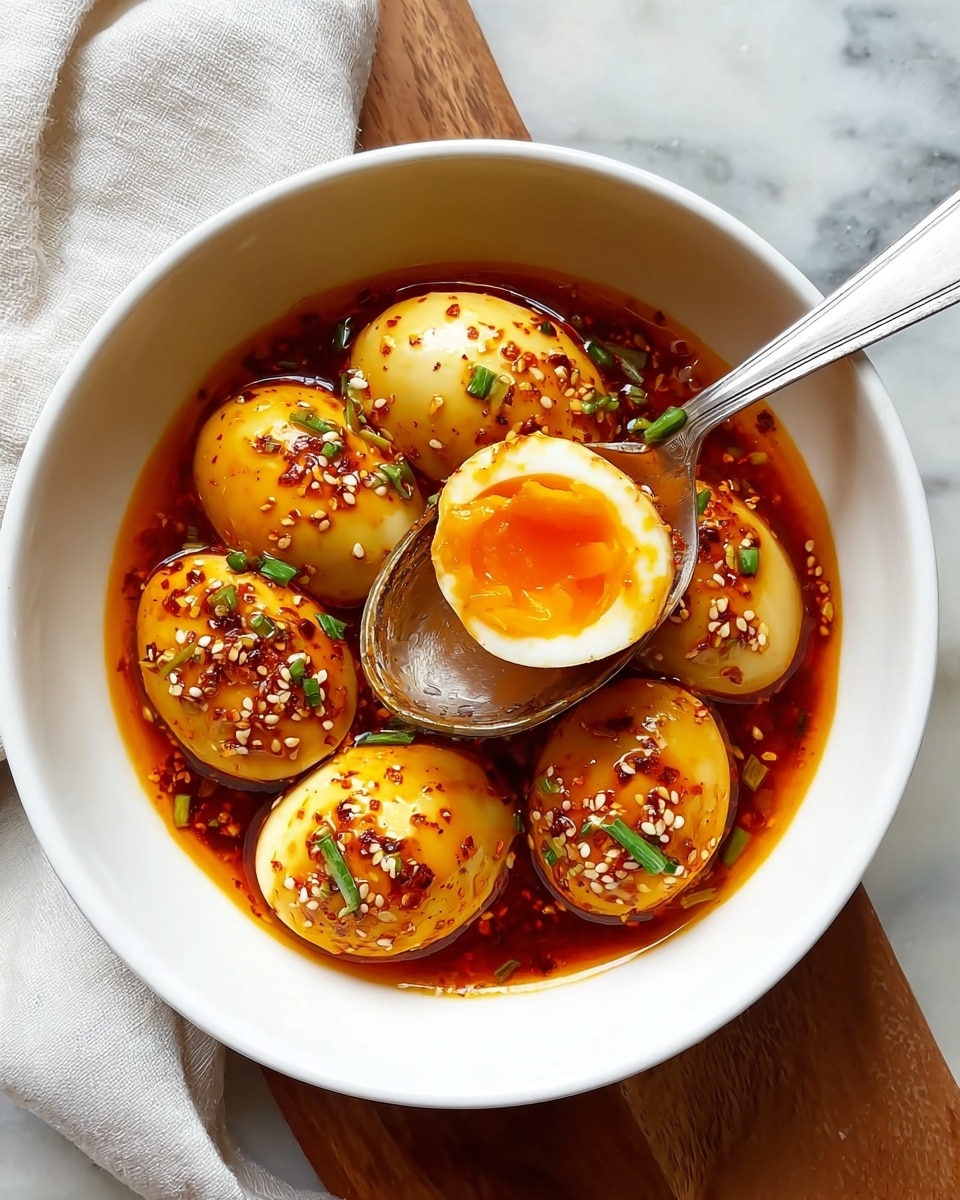
Spicy Gochujang Eggs are a delicious way to add a bold, flavorful twist to your breakfast. These boiled eggs are coated in a savory, slightly sweet chili sauce that brings warmth and a touch of heat to your morning routine.
Ingredients
- 2 large eggs (boil for 6 minutes for runny or 9 minutes for hard-boiled)
- 2 tablespoons gochujang (can substitute with another red chili paste)
- 1 tablespoon soy sauce (use Tamari for gluten-free)
- 1 teaspoon sugar (brown sugar can be used for deeper flavor)
- 1 tablespoon rice vinegar (can substitute with apple cider vinegar)
- 1/4 cup chicken stock or water (vegetable stock can be used for vegetarian option)
- 1 tablespoon neutral oil (can substitute with sesame oil)
- 2 cloves garlic, minced (adjust based on preference)
- 1 tablespoon scallion, sliced (can substitute with chives or green onions)
- 1 tablespoon toasted sesame seeds (omit if avoiding seeds or nuts)
Instructions
- Step 1: Bring a pot of water to a rolling boil. Carefully add the eggs and cover. Set a timer for 7 minutes, adjusting based on your preferred doneness.
- Step 2: Transfer the eggs to an ice bath immediately after boiling to stop the cooking process. Let them cool for a few minutes, then peel and set aside.
- Step 3: In a bowl, mix together gochujang, soy sauce, sugar, rice vinegar, and chicken stock or water until well combined.
- Step 4: Heat neutral oil in a skillet over medium-high heat. Add the minced garlic and sauté for about 15 seconds until fragrant.
- Step 5: Stir in the sauce mixture and bring it to a gentle simmer.
- Step 6: Add the peeled eggs to the skillet, cooking for another 3 minutes. Turn them occasionally to ensure they are fully coated in the savory sauce.
- Step 7: Serve your vibrant eggs over steamed rice, garnishing with sliced scallions and toasted sesame seeds for an added crunch.
Tips & Variations
- For a vegetarian version, use vegetable stock instead of chicken stock in the sauce.
- Adjust garlic quantity to your taste preference—use more for a stronger flavor or less for subtlety.
- Serve with a side of kimchi for an authentic Korean-inspired meal.
- Swap neutral oil with toasted sesame oil for a nuttier flavor in the sauce.
Storage
Store any leftover eggs and sauce separately in airtight containers in the refrigerator for up to 2 days. Reheat gently in a skillet or microwave before serving to avoid overcooking the eggs.
How to Serve
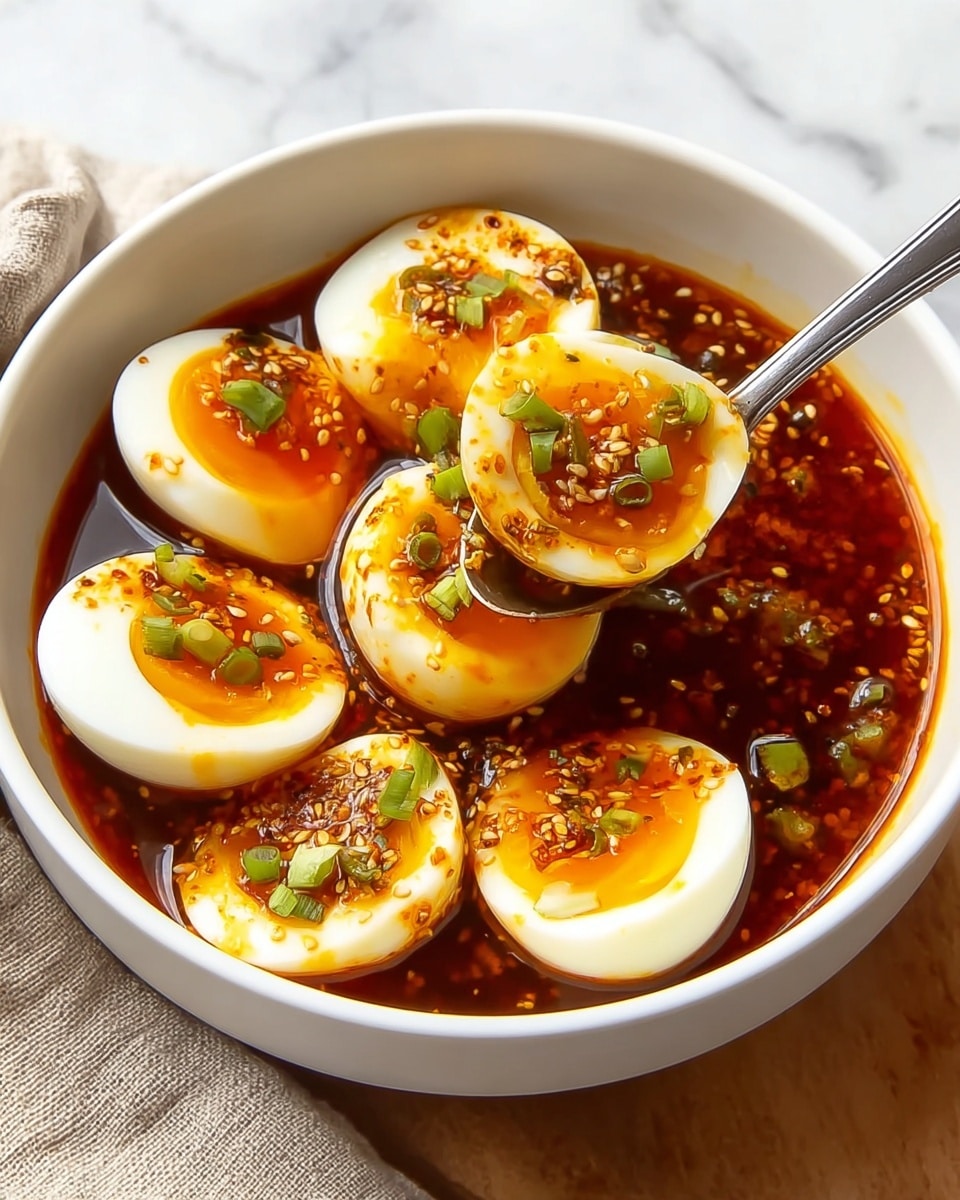
Serve this delicious recipe with your favorite sides.
FAQs
Can I use other types of chili paste instead of gochujang?
Yes, you can substitute gochujang with other red chili pastes, but the flavor profile might change slightly. Look for pastes that have a similar balance of heat and sweetness.
How do I achieve runny yolks with this recipe?
Boil the eggs for about 6 minutes instead of 7 to keep the yolks runny. Be sure to immediately transfer them to an ice bath to stop further cooking.
PrintSpicy Gochujang Eggs: Elevate Your Breakfast Game Today Recipe
Spicy Gochujang Eggs elevate your breakfast with a perfect balance of creamy boiled eggs and a savory, mildly spicy Korean-inspired sauce. This recipe features eggs boiled to your preferred doneness, simmered in a flavorful gochujang-based sauce, and garnished with scallions and toasted sesame seeds for a delightful crunch and fresh finish.
- Prep Time: 10 minutes
- Cook Time: 15 minutes
- Total Time: 25 minutes
- Yield: 2 servings 1x
- Category: Breakfast
- Method: Stovetop
- Cuisine: Korean
- Diet: Gluten Free
Ingredients
For the Eggs
- 2 large eggs (boiled for 6 minutes for runny yolk or 9 minutes for hard-boiled)
For the Sauce
- 2 tablespoons gochujang (Korean red chili paste, can substitute with another red chili paste)
- 1 tablespoon soy sauce (use Tamari for gluten-free option)
- 1 teaspoon sugar (brown sugar can be used for deeper flavor)
- 1 tablespoon rice vinegar (can substitute with apple cider vinegar)
- 1/4 cup chicken stock or water (vegetable stock for vegetarian option)
- 1 tablespoon neutral oil (can substitute with sesame oil)
- 2 cloves garlic, minced (adjust based on preference)
For Garnishing
- 1 tablespoon scallion, sliced (can substitute with chives or green onions)
- 1 tablespoon toasted sesame seeds (omit if avoiding seeds or nuts)
Instructions
- Boil the Eggs: Bring a pot of water to a rolling boil. Carefully add the eggs and cover the pot with a lid. Set a timer for 7 minutes to achieve soft-boiled eggs with slightly runny yolks or adjust timing based on your preferred doneness.
- Ice Bath: Immediately transfer the eggs to an ice bath to stop the cooking process. Let them cool for several minutes, then peel the shells and set the eggs aside.
- Prepare Sauce: In a bowl, combine gochujang, soy sauce, sugar, rice vinegar, and chicken stock (or water) until the mixture is smooth and well blended.
- Cook Sauce: Heat the neutral oil in a skillet over medium-high heat. Add the minced garlic and sauté briefly for about 15 seconds until fragrant, taking care not to burn it. Stir in the prepared sauce mixture and simmer gently to meld flavors.
- Combine Eggs and Sauce: Add the peeled eggs to the skillet with the sauce. Cook for an additional 3 minutes, turning the eggs occasionally to ensure they are evenly coated and infused with the savory, spicy sauce.
- Serve: Place the sauced eggs over steamed rice or your preferred base. Garnish generously with sliced scallions and toasted sesame seeds for added texture and flavor contrast. Enjoy immediately.
Notes
- Adjust boiling time based on your preferred egg yolk consistency: 6 minutes for runny, 9 minutes for fully hard-boiled.
- Use Tamari soy sauce for a gluten-free version of the sauce.
- Substitute vegetable stock for a vegetarian option.
- To add a deeper flavor to the sauce, try using brown sugar instead of white sugar.
- You can replace neutral oil with sesame oil for a nuttier aroma but reduce the amount to avoid overpowering the sauce.
- Omit toasted sesame seeds if you have nut or seed allergies.
- Serve with steamed rice or noodles to make this a more filling meal.
Keywords: spicy eggs, gochujang eggs, Korean breakfast, boiled eggs, savory egg recipe, easy breakfast, Korean sauce eggs