Cranberry Rosemary Artisan Bread Recipe
Introduction
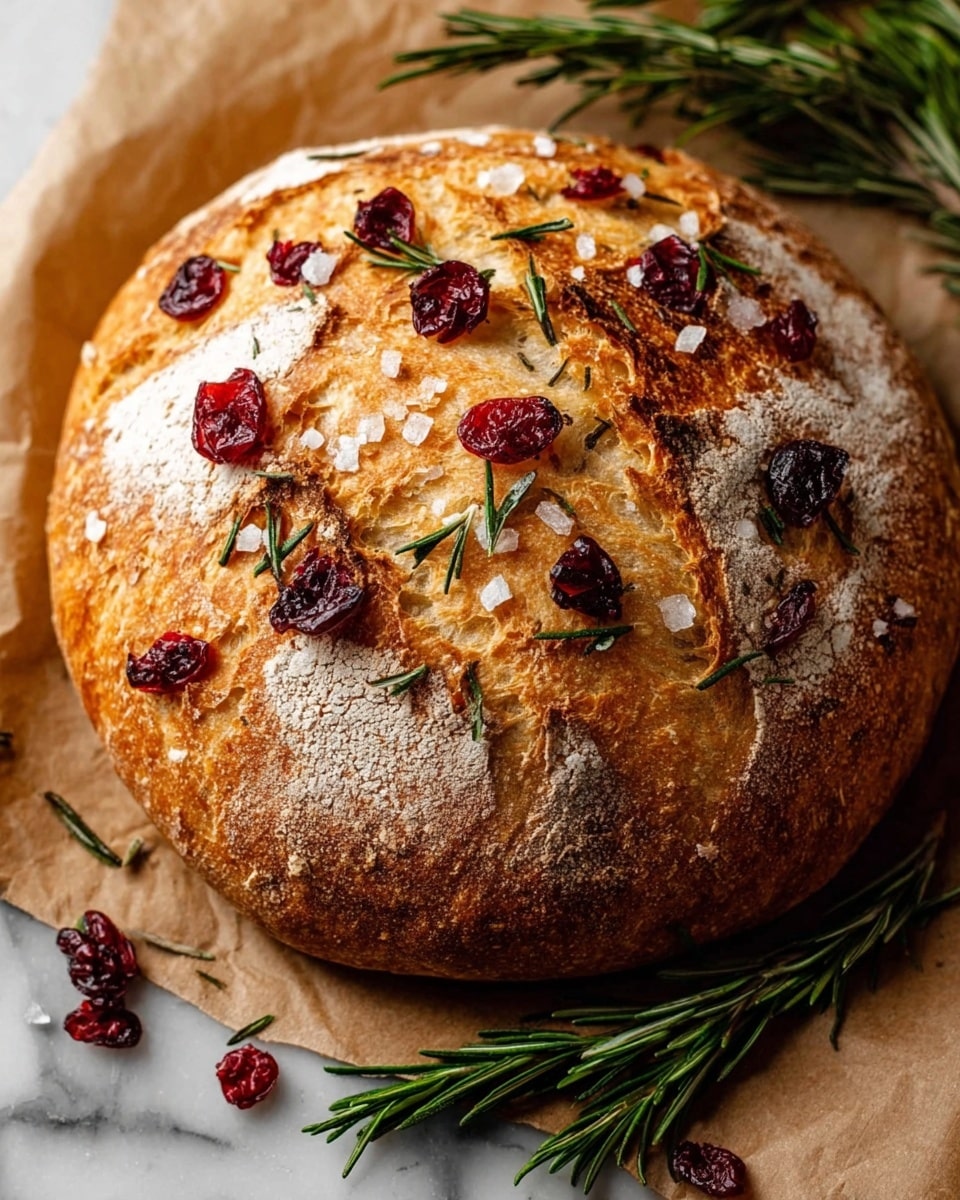
This Cranberry Rosemary Artisan Loaf is a delightful blend of tart cranberries and aromatic rosemary baked into a crusty, airy bread. Perfect for breakfast or alongside your favorite soup, this loaf combines simple ingredients with a slow fermentation for rich flavor and a light crumb.
Ingredients
- 3 cups all-purpose flour
- 1 teaspoon active dry yeast
- 1 teaspoon salt
- 1 1/2 cups warm water (about 100-110°F)
- 1/2 cup dried cranberries
- 2 tablespoons fresh rosemary, chopped
- 1 tablespoon coarse sea salt, for topping
- Extra flour for dusting
Instructions
- Step 1: In a large bowl, combine the flour, yeast, and salt. Add the warm water and stir with a wooden spoon or spatula until a shaggy, sticky dough forms. Do not knead. Gently fold in the dried cranberries and chopped rosemary until just combined.
- Step 2: Cover the bowl tightly with plastic wrap or a kitchen towel and let it rest at room temperature for at least 12 hours, or up to 18 hours, until the dough is bubbly and more than doubled in size.
- Step 3: About 30 minutes before baking, place a Dutch oven with its lid into your oven and preheat to 450°F (232°C) to ensure it gets very hot.
- Step 4: Liberally flour a clean surface or piece of parchment paper. Gently scrape the dough out onto it. Fold the edges toward the center a few times to form a round shape, handling lightly to preserve air pockets.
- Step 5: Carefully remove the hot Dutch oven from the oven. Transfer the dough into the pot, using the parchment paper if desired.
- Step 6: Score the top of the dough with a sharp knife or razor blade and sprinkle with coarse sea salt.
- Step 7: Cover the Dutch oven and bake for 30 minutes to trap steam for oven spring and a soft interior.
- Step 8: Remove the lid and bake for another 15-20 minutes until the crust is deeply golden and crunchy.
- Step 9: Remove the loaf and transfer to a wire rack to cool completely before slicing to set the crumb and avoid gumminess.
Tips & Variations
- Use parchment paper to make transferring the dough easier and to prevent sticking.
- Substitute fresh rosemary with dried if needed, but reduce the quantity slightly for less intensity.
- Try adding a handful of toasted walnuts or pecans for extra texture and flavor.
- Maintain the water temperature between 100-110°F to activate the yeast without killing it.
Storage
Store the cooled loaf in a paper bag or bread box at room temperature for up to 3 days to keep the crust crisp. For longer storage, slice and freeze in an airtight bag for up to 1 month. To reheat, toast slices or warm the entire loaf wrapped in foil at 350°F for 10-15 minutes.
How to Serve
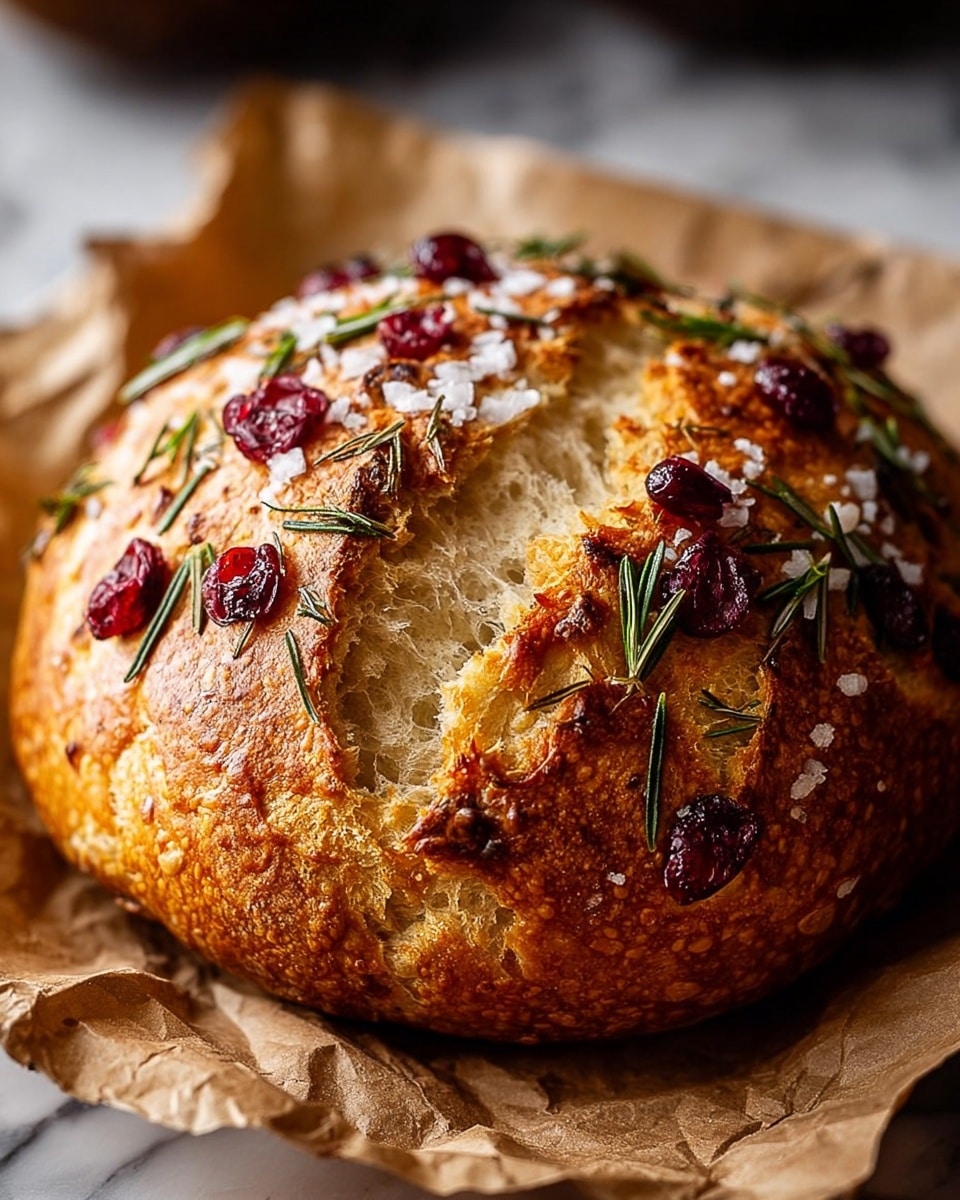
Serve this delicious recipe with your favorite sides.
FAQs
Can I use instant yeast instead of active dry yeast?
Yes, you can substitute instant yeast for active dry yeast using the same amount. Mix it directly with the flour to avoid dissolving it in water first.
What if I don’t have a Dutch oven?
You can use any heavy, oven-safe pot with a lid like a cast-iron casserole dish. If unavailable, bake the dough on a preheated baking stone and place a pan of hot water in the oven to create steam.
PrintCranberry Rosemary Artisan Bread Recipe

This Cranberry Rosemary Artisan Loaf is a rustic, homemade bread bursting with tart dried cranberries and fragrant fresh rosemary. Made with simple ingredients and a no-knead technique, the dough undergoes a long, slow fermentation for a light, airy crumb and rich flavor. Baked in a hot Dutch oven to create steam, this loaf boasts a beautifully crisp crust and soft interior—perfect for breakfast, snacking, or alongside your favorite dishes.
- Prep Time: 15 minutes
- Cook Time: 50 minutes
- Total Time: 12 hours 65 minutes
- Yield: 1 medium artisan loaf (about 8 servings) 1x
- Category: Bread
- Method: Baking
- Cuisine: American
- Diet: Vegetarian
Ingredients
Dough Ingredients
- 3 cups all-purpose flour
- 1 teaspoon active dry yeast
- 1 teaspoon salt
- 1 1/2 cups warm water (about 100-110°F)
- 1/2 cup dried cranberries
- 2 tablespoons fresh rosemary, chopped
Topping
- 1 tablespoon coarse sea salt, for topping
Additional
- Extra flour for dusting
Instructions
- Mix the dough: In a large bowl, combine the flour, yeast, and salt. Add the warm water and stir with a wooden spoon or spatula until a shaggy, sticky dough forms. Avoid kneading to maintain the dough’s high hydration, which results in an airy crumb. Gently fold in the dried cranberries and chopped rosemary until just combined.
- Ferment the dough: Cover the bowl tightly with plastic wrap or a kitchen towel and let rest at room temperature for 12 to 18 hours. The dough should become bubbly and more than double in size, developing flavor and an open texture during this slow fermentation.
- Preheat the Dutch oven: About 30 minutes before baking, place a Dutch oven with its lid in your oven and preheat to 450°F (232°C). The hot Dutch oven will create steam, crucial for a light loaf with a crispy crust.
- Shape the dough: Flour a clean surface or parchment paper liberally. Gently scrape the dough onto it. Fold the dough edges toward the center a few times to form a round loaf, being careful not to overwork it to preserve air pockets.
- Transfer to Dutch oven: Carefully remove the hot Dutch oven from the oven. Transfer the shaped dough into the pot. Using parchment paper to lift and place the dough directly into the pot is optional but helpful.
- Score and salt the dough: Score the top of the dough with a sharp knife or razor blade with a single slash, which directs expansion during baking. Sprinkle coarse sea salt on top.
- Bake covered: Cover the Dutch oven with the lid and bake for 30 minutes. The trapped steam will help the bread rise fully and create a soft, airy crumb.
- Bake uncovered: Remove the lid and continue baking for 15-20 minutes until the crust turns deeply golden brown and crunchy.
- Cool the loaf: Carefully remove the loaf from the Dutch oven and place it on a wire rack to cool completely before slicing. Cooling ensures the internal structure sets and prevents a gummy texture.
Notes
- The long fermentation time is essential for flavor and texture development—do not shorten it.
- Ensure the water is warm, not hot, to activate the yeast without killing it.
- Using a very hot Dutch oven traps steam for a better crust and oven spring.
- Be gentle when handling the dough to keep the air bubbles intact for a light crumb.
- This bread pairs beautifully with cheeses, salads, or as a base for sandwiches.
- Store cooled bread in an airtight container or bread box for up to 3 days, or freeze slices for longer storage.
Keywords: artisan bread, cranberry bread, rosemary loaf, no knead bread, Dutch oven bread, homemade bread, rustic bread, slow fermentation bread